
Preparing students for the KEY English Test
October – Initial practice tests to determine the level (do 3 or 4 before the end of February)
March – Decide which students will enter the exams in June and give their parents the Exam Information and registration form.
December to June – Give students regular exam practice especially for parts where they are struggling
Giving and correcting practice tests
All students who are preparing for exams will receive a preparation pack with lots practice tests.
Practice exams should really be done outside of the classroom as a homework task so that they don’t take up teaching time. However you may need to explain how to do some parts of the test to some groups. You can explain how to approach parts of the test and you can guide them a little as to how to find the answer.
Correcting the exam
- Correct the tests yourself indicating wrong answers but not giving the correct answer.
- Complete the results sheet at the start of the exam pack
- Students look at their errors at home and try to figure out their mistakes.
- Following class review the errors together and address any language areas or skills.
Keep an eye on the parts of the test that they are struggling with and any grammatical points that may need to review.
It is a good idea to teach different approaches to answering the questions and techniques to help them with certain parts of the test. Advice for this can be found in the Cambridge Teachers Exam Handbooks which are available on https://www.teachers.cambridgeesol.org/ts/exams. This site also contains a heap of extra material and videos of speaking practices. Www.onestopenglish.com also has some great ideas for teaching for the exams. Also check out www.examenglish.com. In addition, the exam practice books have tips for each part of the exam as do many of the course books. I find the Premium series offer good exam advice.
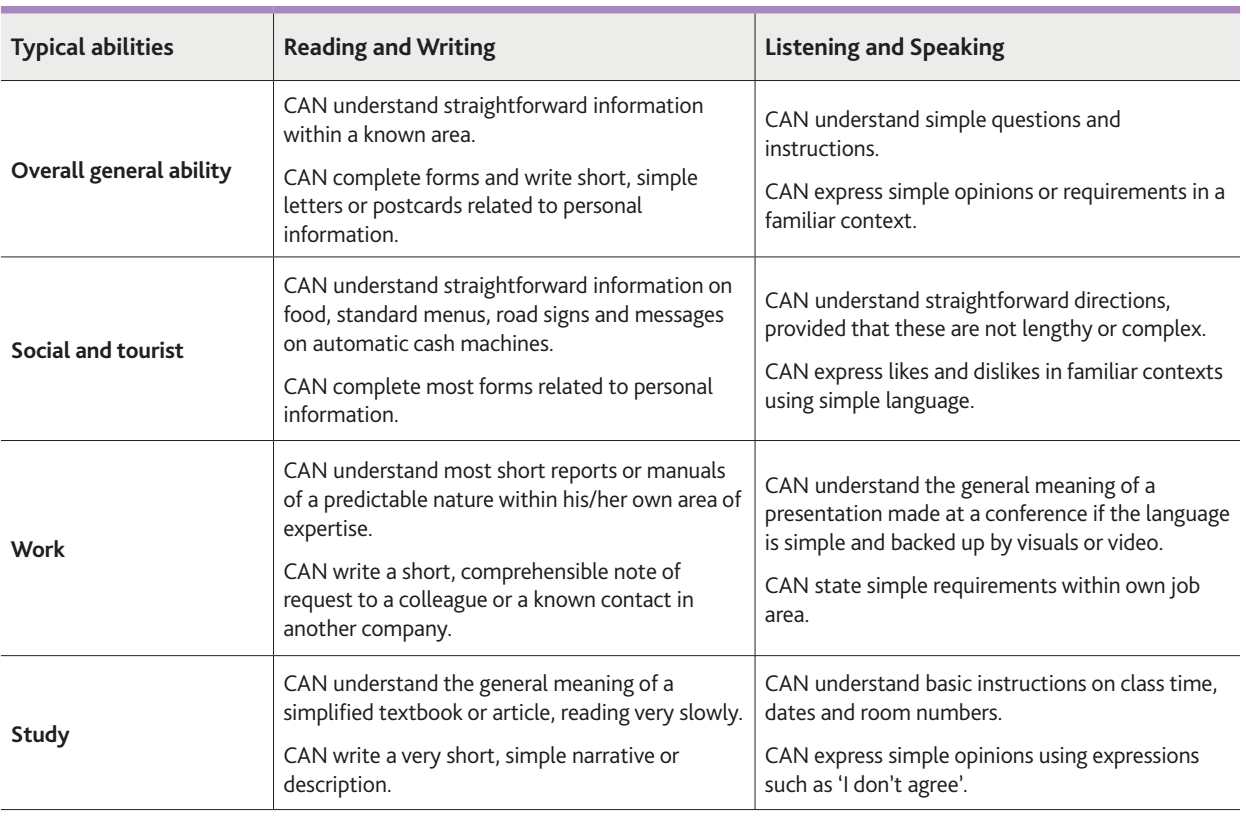
KEY Level / What can candidates do at Level A2?
The Test Format
Reading – 30 marks, 35-40 minutes, 5 tasks
Writing – 30 marks, 20-25 minutes, 2 tasks
Tips for reading skills
✔✔ Practise skimming and scanning both shorter and longer texts.
✔✔ Encourage learners to always skim a text first to get the general idea. understanding.
✔✔ Encourage your learners to read instructions carefully and highlight key words
✔✔ Give learners practice doing timed exercises
✔✔ Ask them to find some specific information in some texts.
✔✔ Ask the Comprehension Checking Questions about what they have read
✔✔ If they are reading a message, ask them to think how they would reply to it.
✔✔ Help them work out the meaning of new words by using context.
Extra Practice – https://englishwithkaty.com/grammar-practice-for-english-exams/
Tips for writing skills
- Students should have a separate notebook for compositions.
- When students make simple errors, just point it out to them for self-correction – keep a track of this.
- Spelling errors – I get them to copy the correct spelling a few times in the back of their books
- Encourage students to use linking words, find synonyms and use a range of language.
- Encourage students to plan their compositions, organise their ideas and paragraphs, brainstorm vocabulary and think about where they can use better language
- Encourage students to check their work – spelling, tenses and simple grammar errors, structure and tone, included all the information, repetition
- Most writing tasks should be done at home but you can do some fun and dynamic class writing activities for speed writing and error corrections games
FOR EMAIL-WRITING:
• Identify the important information and understand the task
• Practice writing emails and letters regularly.
• Know the structure of emails, including used for opening and closing an email.
FOR STORY-WRITING:
• Story telling activities in class – using props, images, comic strips,
• Learn to plan a story. Know how stories start, develop and end.
• Write short stories regularly at home.
• Remind them to use linking words, sequencers, descriptive language e.g. adjectives and the past tenses.
In the exam…leave enough time / clear handwriting / include all the important information
Extra Practice – https://englishwithkaty.com/better-writing/
Tips for Speaking
-
- Make sure that learners are able to answer simple questions about themselves.
Practice expressing likes, dislikes and personal opinions - Encourage them to ask for repetition or clarification
- Make sure they speak with confidence and clearly
- Body language, listening to their partner and active listening skills are important
- Show them a demo video of the exam so they know what to expect
- Encourage them to help each other by sharing ideas on how to improve their answers
- Always encourage them to expand by giving reasons
- Practice ways of keeping conversations going by inviting and responding to opinions of others.
Teacher Development and Information